Data Dive: Measles Detection
Earlier this month, the United States, along with Mexico and Bolivia, lost their measles elimination statuses.1 This means for the past 12 or more months, the same measles virus has been circulating around the countries uninterrupted. As of November 13, 2026, there were 58,213 confirmed measles cases in the North and South America region. One way to interrupt the transmission of measles and work toward elimination is understanding where the virus is spreading to concentrate interruption efforts.
As we know, this is an issue of importance to many Subscribers. We have added new data on measles detection in wastewater to help you stay informed on this emerging issue. The following blog will explain more about this specific data set, how to use it, and where to find out more.
What do the data describe?
What do these data tell me?
Where can I access the data?
Where can I find more information?
What do the data describe?
The measles in wastewater data is sourced from the Centers for Disease Control and Prevention Wastewater Monitoring platform. This data is updated on a weekly basis to help understand the risk of measles at a community level.
What does the measles in wastewater data tell me?
At a basic level, this data tells you which communities have had positive cases of measles in the past week, 6 weeks, and 6 months. The results are based on wastewater testing, which detects whether or not a wild-type measles virus is apparent.2 As each wastewater site runs tests on different schedules, we recommend looking at the 6-week results for the most accurate current estimates.
The drawback of this data is that it is not produced at an individual level. Rather, it only provides data at the community level. As such, a positive result indicates that people who currently have or previously had measles were in the community; but it cannot tell us if these people live and work in the area or if they were visiting.
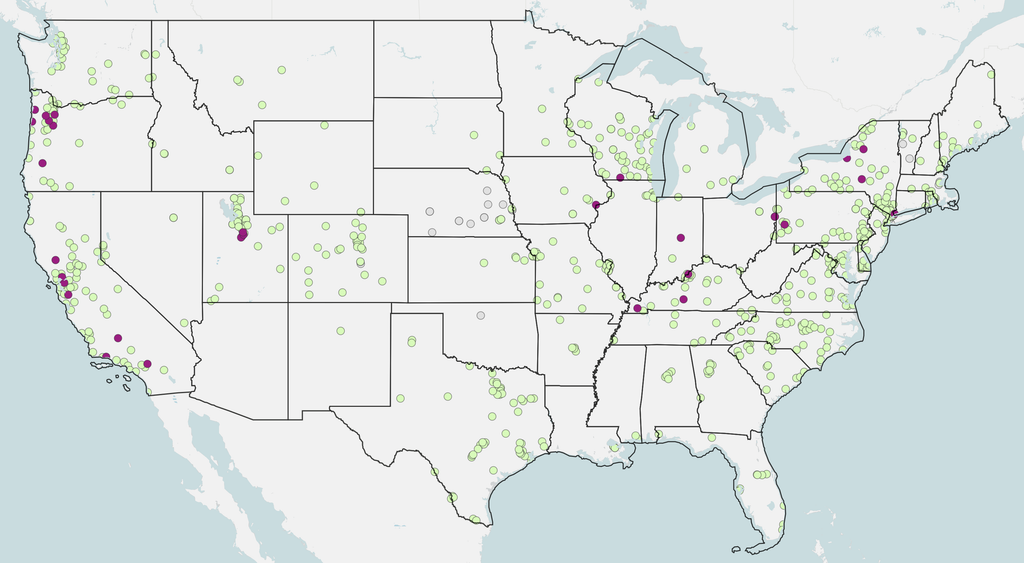
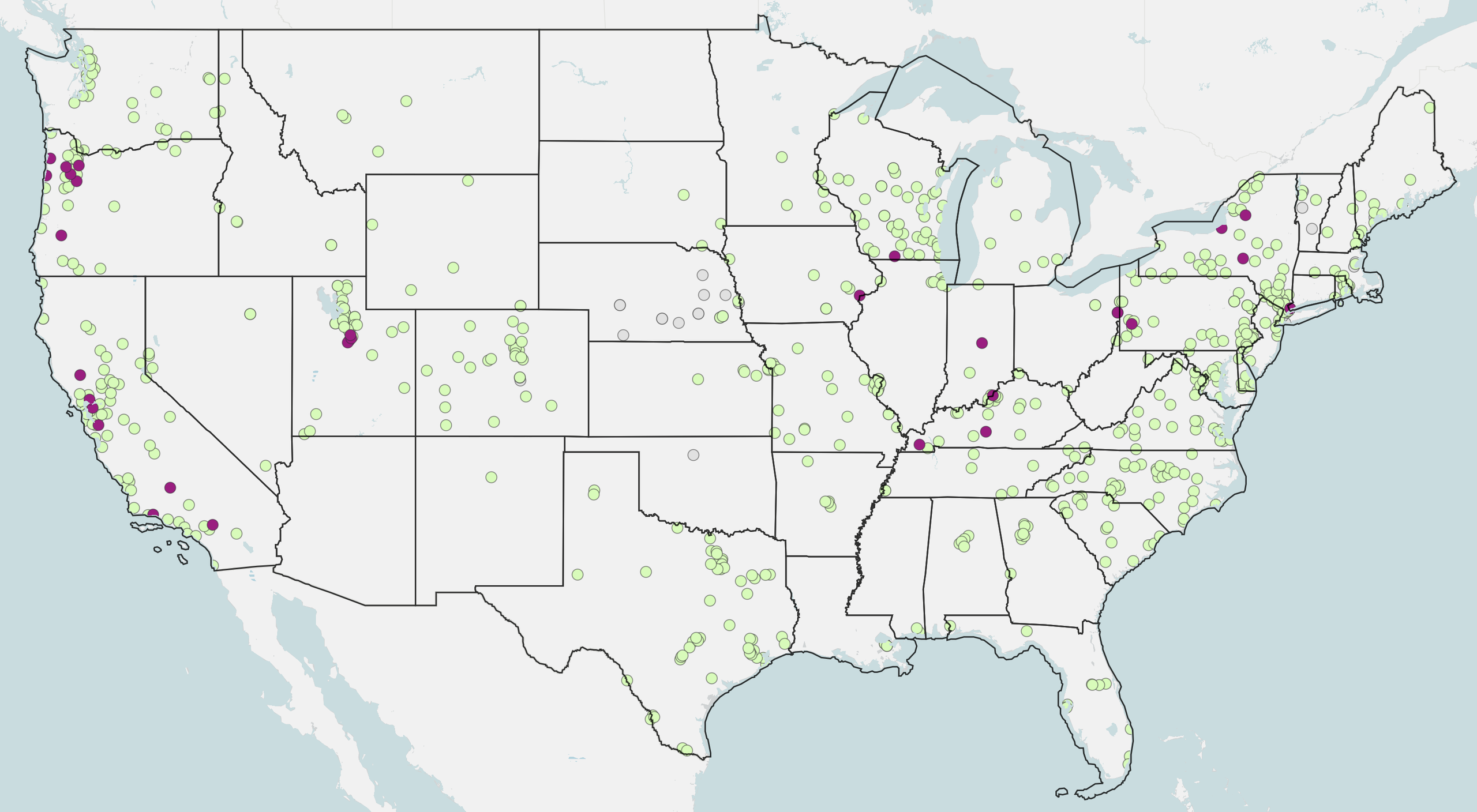
The map (Figure 1) shows you three possible results for a wastewater site based on the selected time frame. First, a Detection result indicates that at least one sample came back positive for measles during the selected time frame (i.e., 1 week, 6 weeks, 6 months). Next, a no detection result means that no samples of measles were detected within the selected time frame. Lastly, no recent testing means that the site has not reported any testing for measles during the selected time frame.
Where can I access the data?
Measles detection in wastewater data is available for free to everyone on SparkMap in the Map Room. Keep an eye out on data news, as we plan to add similar data related to common respiratory viruses (e.g., COVID-19, Influenza A, and RSV) soon.
Where can I find more information on wastewater disease detection?
To find more information about measles detection in wastewater, we recommend visiting the CDC’s Wastewater Monitoring site. Interested in similar data on other emerging issues? We’d love to hear from you!